Friday, August 3, 2012

To Advance Like Himself

"And it came to pass, as the voice was still speaking, Moses cast his eyes and beheld the earth, yea, even all of it; and there was not a particle of it which he did not behold, discerning it by the Spirit of God. And he beheld also the inhabitants thereof, and there was not a soul which he beheld not; and he discerned them by the Spirit of God; and their numbers were great, even numberless as the sand upon the sea shore. And he beheld many lands; and each land was called earth, and there were inhabitants on the face thereof. And it came to pass that Moses called upon God, saying: Tell me, I pray thee, why these things are so, and by what thou madest them?" - Moses 1:27-30

What are these things so? I like to ask questions of purpose. The answers can be very helpful. A collection of several details and facts is nice but it is better to have a narrative that brings them all together in proper order and context. But answers are not always given. When Moses asked why all "these things" were so he was first told "For mine own purpose have I made these things. Here is wisdom and it remaineth in me." (Moses 1:31) Moses was given great knowledge and exposure to the work of God but he was not shown everything. In fact he could not behold all of God's works "and afterwards remain in the flesh on the earth." (Moses 1:5) But much was revealed to him and, through Joseph Smith, to us. Referring to all His works throughout the universe the Lord God said: "For behold, this is my work and my glory—to bring to pass the immortality and eternal life of man." (Moses 1:39) This is context for the great vision. The worlds, the plan were framed to bring to pass our immortality and eternal life.

This context gives us some understanding of the details in our lives. It is not exhaustive, but it helps.

Why are we born?
Why do we die?
Why do we have fun?
Why do we feel pain?

There are not always specific answers given to understand the divine purpose of each individual experience but there is a general context. "All these things shall give thee experience, and shall be for thy good." (Doctrine and Covenants 122:7)  These things have purpose. Everything works toward the work and glory of God: the immortality and eternal life of his children. Brigham Young gave this inspired teaching:

"All intelligent beings who are crowned with crowns of glory, immortality, and eternal lives must pass through every ordeal appointed for intelligent beings to pass through, to gain their glory and exaltation." (Journal of Discourses 8:150)

It is in this context of God's purposes that we can understand His laws. In fact it can help to understand the nuanced teachings of Jesus in what some have called the "spirit of the law". Laws themselves, being part of the great plan, are not without purpose. God's laws have meaning and purpose. The "spirit of the law", its purpose and meaning can be better understood by knowing who God is and who we are. Joseph Smith taught:

"If men do not comprehend the character of God, they do not comprehend themselves." (History of the Church 6:303)

The revelations given to Joseph Smith teach that God is a person with a "body of flesh and bones" (Doctrine and Covenants 130:22). Joseph Smith even taught: "God himself was once as we are now, and is an exalted man." (History of the Church 6: 305). Unmistakably, this is a doctrine of a personal God in the most literal sense. We also know that God has passions, or to use a more common term, feelings. God has very intense love and attachment to his children. The Johannine author even taught that "God is love". (1 John 4:8) What is the relationship between this personal God and us, His children? Why do we need to understand the character of God to comprehend ourselves?

"God himself, finding he was in the midst of spirits and glory, because he was more intelligent, saw proper to institute laws whereby the rest could have a privilege to advance like himself. The relationship we have with God places us in a situation to advance in knowledge. He has power to institute laws to instruct the weaker intelligences, that they may be exalted with Himself, so that they might have one glory upon another, and all that knowledge, power, glory, and intelligence, which is requisite in order to save them in the world of spirits." (History of the Church 6:312)

This is a most fascinating account of the origin of divine law. Not only does this narrative reveal the origin of law but also its purpose. Laws our given so that, by obeying them, we can advance and be exalted, becoming like God. It is an invigorating doctrine. Joseph Smith remarked immediately after teaching this:

"This is good doctrine. It tastes good. I can taste the principles of eternal life, and so can you. They are given to me by the revelations of Jesus Christ; and I know that when I tell you these words of eternal life as they are given to me, you taste them, and I know that you believe them. You say honey is sweet, and so do I. I can also taste the spirit of eternal life. I know that it is good; and when I tell you of these things which were given me by inspiration of the Holy Spirit, you are bound to receive them as sweet, and rejoice more and more." (History of the Church 6:312)

Understanding both the origin and purpose of the laws of God can help us to comprehend the "spirit of the laws" as taught by Jesus. Consider Jesus' somewhat midrashic exposition of the commandment against murder:

"Ye have heard that it was said by them of old time, Thou shalt not kill; and whosoever shall kill shall be in danger of the judgment:"

"But I say unto you, That whosoever is angry with his brother without a cause shall be in danger of the judgment: and whosoever shall say to his brother, Raca, shall be in danger of the council: but whosoever shall say, Thou fool, shall be in danger of hell fire."

"Therefore if thou bring thy gift to the altar, and there rememberest that thy brother hath ought against thee; Leave there thy gift before the altar, and go thy way; first be reconciled to thy brother, and then come and offer thy gift."

"Agree with thine adversary quickly, whiles thou art in the way with him; lest at any time the adversary deliver thee to the judge, and the judge deliver thee to the officer, and thou be cast into prison. Verily I say unto thee, Thou shalt by no means come out thence, till thou hast paid the uttermost farthing." (Matthew 5:21-26)

Jesus taught that we must not only abstain from the act of murder but also from the thoughts and attitudes of anger. His counsel was to make peace with any who would be an adversary. This was not only a matter of righteous actions but righteous intent and desire. This teaching went further still:

"Ye have heard that it hath been said, Thou shalt love thy neighbour, and hate thine enemy."

 "But I say unto you, Love your enemies, bless them that curse you, do good to them that hate you, and pray for them which despitefully use you, and persecute you; That ye may be the children of your Father which is in heaven: for he maketh his sun to rise on the evil and on the good, and sendeth rain on the just and on the unjust."

 "For if ye love them which love you, what reward have ye? do not even the publicans the same? And if ye salute your brethren only, what do ye more than others? do not even the publicans so?"

 "Be ye therefore perfect, even as your Father which is in heaven is perfect." (Matthew 

What is the unifying principle of all the law? Asked another way, which is the great commandment in the law? Jesus said:

"Thou shalt love the Lord thy God with all thy heart, and with all thy soul, and with all thy mind. This is the first and great commandment."

 "And the second is like unto it, Thou shalt love thy neighbour as thyself."

 "On these two commandments hang all the law and the prophets." (Matthew 22:36-40)

The unifying principle is love. This is consistent with the teachings of Joseph Smith and other scriptures. "God is love" (1 John 4:8) and the laws were instituted so that we could advance like God. What is this state of advanced perfection that God enjoys? It is His perfect love. The laws of God, as understood through the teachings of Jesus and the revelations of Joseph Smith, reveal that laws are not only about actions that we perform but our very character, what we become.

This fundamental basis for divine law can give proper context to individual commandments. Describing the scriptural and theological foundation of moral obligation Latter-day Saint philosopher Blake Ostler wrote:

"What laws define the conditions of mutual self-realization that we must abide to partake of the divine nature? The answer is that there is one eternal law that defines this possibility: the law of love."

"...by learning to love one another, we learn to be as God is. The purpose of life is to learn--and to learn one thing in particular: to love one another. As we progress in knowledge, as we learn to love, we reflect the image and likeness of divinity in our countenances. The purpose of the moral law is to challenge us to so act that we love others as we love ourselves. Thus, good and evil can be defined solely in terms of the low of love."

"...Paradoxically, there is only one way to realize our nature--only one path to actualize our potential to be as God is; and that is to be as God is. How is it possible that to realize our potential to be as God we must be already as God is? By being loving, for that is how God is. Thus, the love command is the clearest expression that God's purpose for us is deification, to give us commandments to guide us to be what He is. The fact that love is commanded is also a clear recognition that our true nature is divine and that deification is the fullest realization of human potential."

"...God gives us all of the commandments to teach us how to love one another, for all commandments are summed up in the great command to love God with all of our heart, might, mind and strength and to love our neighbor as we love ourselves. God's purpose in giving us the commandments is also to lead us to exalted happiness and joy unalloyed." [1]

Understanding the origin and purpose of law in the context of Joseph Smith's King Follett Discourse also gives special insight into the role of doing and becoming in the Plan of Salvation. Law is not just about doing something, but also about becoming something. God instituted laws whereby we might advance like him and that is to become like him. This is idea is shown in a parable given by Elder Dallin H. Oaks:

"A wealthy father knew that if he were to bestow his wealth upon a child who had not yet developed the needed wisdom and stature, the inheritance would probably be wasted. The father said to his child:"

“'All that I have I desire to give you—not only my wealth, but also my position and standing among men. That which I have I can easily give you, but that which I am you must obtain for yourself. You will qualify for your inheritance by learning what I have learned and by living as I have lived. I will give you the laws and principles by which I have acquired my wisdom and stature. Follow my example, mastering as I have mastered, and you will become as I am, and all that I have will be yours.'"

"This parable parallels the pattern of heaven. The gospel of Jesus Christ promises the incomparable inheritance of eternal life, the fullness of the Father, and reveals the laws and principles by which it can be obtained." [2]

Of key importance here is that the significant outcome is character, not just a record of actions. Elder Oaks taught that the gospel of Jesus Christ challenges us to become something:

"Many Bible and modern scriptures speak of a final judgment at which all persons will be rewarded according to their deeds or works or the desires of their hearts. But other scriptures enlarge upon this by referring to our being judged by the condition we have achieved."

"The prophet Nephi describes the Final Judgment in terms of what we have become: 'And if their works have been filthiness they must needs be filthy; and if they be filthy it must needs be that they cannot dwell in the kingdom of God' (1 Ne. 15:33). Moroni declares, 'He that is filthy shall be filthy still; and he that is righteous shall be righteous still' (Morm. 9:14; see also Rev. 22:11–12; 2 Ne. 9:16; D&C 88:35). The same would be true of 'selfish' or 'disobedient' or any other personal attribute inconsistent with the requirements of God. Referring to the 'state' of the wicked in the Final Judgment, Alma explains that if we are condemned by our words, our works, and our thoughts, 'we shall not be found spotless; … and in this awful state we shall not dare to look up to our God' (Alma 12:14)."

"From such teachings we conclude that the Final Judgment is not just an evaluation of a sum total of good and evil acts—what we have done. It is an acknowledgment of the final effect of our acts and thoughts—what we have become. It is not enough for anyone just to go through the motions. The commandments, ordinances, and covenants of the gospel are not a list of deposits required to be made in some heavenly account. The gospel of Jesus Christ is a plan that shows us how to become what our Heavenly Father desires us to become." [3]

This state is to be like God, to advance like Him. God is not jealous of the kind of existence he enjoys. The very purpose of our life is to become like Him. That is why he has given us laws, commandments. And the essence of these laws is love.

References

1. Ostler, Blake. Exploring Mormon Thought: The Problems of Theism and the Love of God. p. 110-113.
2. Oaks, Dallin H. The Challenge to Become. Ensign. Nov. 2000.
3. ibid.

Friday, March 16, 2012

Richard Bushman on the Nature of God

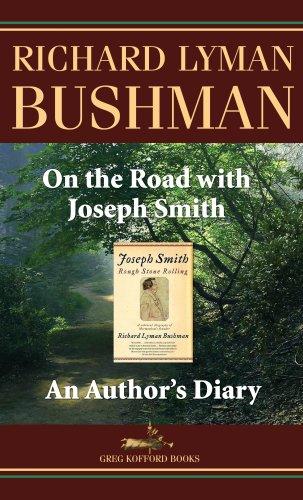
I have been reading Richard Bushman’s published diary On the Road with Joseph Smith. Bushman is the author of Joseph Smith: Rough Stone Rolling, a massive biography of the Mormon prophet. I have read the biography as well and loved it. In this author’s diary he writes of his experiences going to book signings and meeting with people around the country talking about his book and about Joseph Smith.

I found the following entry especially intriguing. He goes on a whole riff about the nature of God and all kinds of interesting stuff.

October 28, 2005

… My son Ben came to the signing after finishing his work in Draper where his small computer firm has an office. Afterward we had dinner at a nearby Chinese restaurant. He was curious about my answer to a question about any inspiration I had while writing the book. The questioner wanted to know if any doctrines had come to me strongly. I replied that some had, but I could not say much about them in that setting. Ben was intrigued by my mysterious evasion, and I told him that some doctrines I considered most valuable to my inner life were incommunicable. When I tried, they fell flat. Later in the discussion, he said he was working with the idea that God had optimized the world to the maximum benefit of all his children. I replied this implied he actually controlled everything, leaving us with no free agency. We went back and forth on this point rather unsatisfactorily. I could not make myself clear, underscoring my feeling about my favorite doctrines going nowhere when I try to describe them. My reservations go beyond my inability to describe them to my uncertainty about their validity. Am I demeaning God in not allowing him perfect control over all events and perfect knowledge of everything that will happen? What is my point of view?

1. God is one of a number of superior intelligences who have learned—how we do not know exactly—to obtain glory and intelligence. They can create worlds and do much else.

2. These gods take us lesser intelligences, swimming about like fish in the sea, under their tutelage, saying they will teach us how to achieve intelligence and glory.

3. One of their great lessons is that we can do more acting together than we can standing (or swimming) alone. Thus, they bind us to them with multiple covenants.

4. We are not only to obey them; we are to join with our brothers and sisters in the order of the priesthood under God’s direction. This priesthood goes back before the foundations of the earth and includes all the gods who have gone before. They are bound into one God whose combined force and intelligence is the source of glory. We may even add to the glory by joining them—like computers strung in parallel, generating computing power. Hence the essential importance of unity.

5. In this sense, the priesthood is God. When joined together like the council of gods that organized the earth, it manifests its godly powers. At the same time, any one God can speak for the whole because they are unified. Adam can become the God of this earth under Christ’s suzerainty.

6. We exist on the ragged edges of this holy order, but in subscribing to it we join the grand alliance that rules the godly universe.

7. Outside of this created order, only chaos reigns, but in the outer darkness are other intelligences such as Lucifer who have orders and priesthoods of their own, independent of and possibly in opposition to Elohim’s.

8. Within the created order, the intelligences find their places, some as animals, some as stones perhaps, some as humans. The diversity of forms on the earth suggests the diversity of unorganized intelligences. Hence the detail in the temple account of creation of the many forms of life, each to fulfill the measure of its creation.

9. Ben believes each of these intelligences will assuredly find its true place where it can maximize its possibility. God will guarantee that. He may be right but I suggest the alternative view that God is constantly recruiting intelligences to the godly path and the success of this operation depends on us. If we attract people to Christ, they get included; if someone doesn’t reach them, these souls may slip to a lesser spot. God will not necessarily guarantee everyone the highest possible position for his or her intelligence. Some may fall to a lower rung because there was no one there to raise them up. It is scary, but it makes life real. What makes it less scary is that there are many ways to grow in intelligence. The Mormons are not the only source of light. Christ radiates throughout the world, through many voices. We need only to listen to one to set our foot on the right path.

As I write, this doctrine tastes good to me. I believe it is truth. All of it can be found in Joseph’s teachings...

I have always found Joseph Smith’s ideas about eternal progression and exaltation very inspiring and expansive. I thought Bushman’s articulation of these concepts was interesting and worth sharing.


Note: The excerpt above is from pages 59-61.

Friday, December 23, 2011

O Holy Night


O Holy Night, by Adolphe Adam, is probably my favorite Christmas song.  The lyrics are absolutely sublime.  The last verse is my favorite because it speaks to me of the essence of Jesus' life - love, peace, and liberation.

This is also my favorite painting of Jesus - Healing at the Pool of Bethesda by Carl Bloch.  I don't know what the artist had in mind with this painting but to me it speaks of Jesus showing compassion toward the outcasts, the people who have been most forgotten and neglected.  I think of this painting whenever I here the third verse of O Holy Night.

This Christmas as I have remembered Jesus Christ I have come back again and again to this song and this image and it has inspired me.  So I wanted to share it.

Merry Christmas

Sunday, November 20, 2011

Personal and Social Righteousness


The scriptures give some beautiful examples of ideal communities, in records about the past and in prophesy about the future.  There was the City of Enoch where the people “were of one heart and one mind, and dwelt in righteousness; and there was no poor among them.” (Moses 7:18) There was the community in the Book of Mormon after the visitation of Christ and afterward in which “there were no contentions and disputations among them, and every man did deal justly one with another.  And they had all things common among them; therefore there were not rich and poor, bond and free, but they were all made free, and partakers of the heavenly gift.” (4 Nephi 1:2-3) Prophets have also prophesied that after the Second Coming of Christ there would follow the Millennium, a thousand-year period of peace and righteousness.  It is said, “children shall grow up without sin unto salvation.” (Doctrine and Covenants 45:58) It is also said “Satan shall not have power to tempt any man.” (Doctrine and Covenants 101:28) In Revelation it is said that Satan will be “bound”. (Revelation 20:2) In the Book of Mormon, Nephi added some insight to this prophesy saying, “And because of the righteousness of his [the Lord’s] people, Satan has no power; wherefore, he cannot be loosed for the space of many years; for he hath no power over the hearts of the people, for they dwell in righteousness, and the Holy One of Israel reigneth.” (1 Nephi 22:26) It is not because Satan has no power that the people are righteous, it is because the people are righteous that Satan has no power.  Why are the people righteous during these times and why are people not similarly righteous all the time?

What is interesting about such paradisiacal periods is that all the people in these societies are righteous.  This is unusual.  We are used to reading stories about a few righteous people living amid evil—the lone voice crying in the wilderness as it were.  But for an entire people to be righteous is quite noteworthy.  Is it because such a society is made up of very special people or is there something about the shared values of the society itself that helps people to be righteous? 

Looking at an entire community is a different way of approaching the subject of righteousness.  In our churches we focus a lot on individual behavior—and that is important since a society is made up of individuals.  But in the scriptures we often read about groups of people.  Nations and peoples are condemned or praised for their practices.  The scriptures often approach things communally, focusing especially on the rulers: “When the righteous are in authority, the people rejoice: but when the wicked beareth rule, the people mourn.” (Proverbs 29:2) “The LORD enters into judgment with the elders and princes of his people: It is you who have devoured the vineyard; the spoil of the poor is in your houses.  What do you mean by crushing my people, by grinding the face of the poor? Says the Lord GOD of hosts.” (Isaiah 3:14-15) In the Book of Mormon as well the warnings are often given to entire cities: “Behold ye, the people of this great city, and hearken unto my words; yea, hearken unto the words which the Lord saith; for behold, he saith that ye are cursed because of your riches, and also are your riches cursed because ye have set your hearts upon them, and have not hearkened unto the words of him who gave them unto you.  Ye do not remember the Lord your God in the things with which he hath blessed you, but ye do always remember your riches, not to thank the Lord your God for them; yea, your hearts are not drawn out unto the Lord, but they do swell with great pride, unto boasting, and unto great swelling, envyings, strifes, malice, persecutions, and murders, and all manner of iniquities.” (Helaman 13:21-22, italics added)

Thinking about these Zion communities, I think there is something fundamental about the things they value that empower individuals in them to live more righteously.  They foster an environment that is highly conducive to everyone's happiness.  This is important because looking at the world now there are ways that our society makes it difficult to live righteously because of the things we value as a group.  A Zion society values love, peace and equality.  But I find that we do not universally value these things in our society, at least not in practice.

The scriptures say to treat people the way we would like to be treated. (Matthew 7:12) But while we pay lip service to selflessness our business culture is not built upon it.  Our ways of dealing with each other are very opportunistic.  A man in a dire situation can be taken advantage of like when he is desperate to sell his home.  We call this a “buyer’s market”.  We are encouraged and rewarded for taking advantage of other people.  The same mentality applies to wages and benefits.  In a recession, you can pay an employee less and offer fewer benefits because he can be easily replaced and is, therefore, “expendable”.  A Zion people with “no poor among them” must have a dramatically different way of thinking about people than we currently do in our society.  Love and equality must be foundational values.

The media contribute a great deal to our values.  In many ways the media improve our lives by allowing us to connect with the rest of the world and to learn.  Indeed, I should think that the media could be a very important, uplifting influence in Zion.  But many of the things valued by the media today are hardly uplifting. The media can be very adversarial, especially many “news” stations that foment anger and division over trivial matters.  It reminds me of the lawyers in the Book of Mormon who would “stir up the people to riotings, and all manner of disturbances and wickedness, that they might have more employ.” (Alma 11:20) Sensationalism over controversy translates into high ratings for stations that enable them also to get gain.  The system is structured in a way that you have to be negative to be successful.

The media also send many harmful messages about sexuality.  There is nothing wrong with sexuality but our values regarding it can be distorted in ways that can really damage people.  To women especially, the implicit message is that men only value women of a certain appearance and if you don’t look like the doctored images on the magazine covers then you will not be attractive to anyone.  Sexuality is being used a commodity to be bought and sold, literally and figuratively, rather than something to be held sacred.  Of course, by no means should sexuality be suppressed.   It should be celebrated, but in an uplifting, respectful and sacred way founded in real love.

One of the most memorable prophesies of the Millennium is that it will be a time of peace.  To describe this we often quote this beautiful passage in Isaiah: “They shall beat their swords into plowshares, and their spears into pruninghooks: nation shall not lift up sword against nation, neither shall they learn war any more.” (Isaiah 2:4) This reminds me of something President Eisenhower said in 1953: “Every gun that is made, every warship launched, every rocket fired signifies, in the final sense, a theft from those who hunger and are not fed, those who are cold and are not clothed.  This world in arms is not spending money alone.  It is spending the sweat of its laborers, the genius of its scientists, the hopes of its children.” [1] I see Eisenhower’s comments as a kind of modern version of Isaiah’s prophesy.  What will we be able to do when we get over our lust for war?  All the science, technology and labor that we devote to weapons of destruction can be applied to building societies up instead of tearing them down.

Moving from a warlike mentality to a commitment for peace means that we need to be more inclusive in our thought.  We have to include all nations, races and religion into our circle of friendship.  It is not enough to just be nice, honorable people to those within our own community and family.  In the Book of Mormon, the Lamanites were very loving among themselves.  Jacob said of them, “their husbands love their wives, and their wives love their husbands; and their husbands and their wives love their children.” (Jacob 2:7) But even though Lamanites were loving toward one another they were still hateful to the Nephites.  Being peaceful means that we widen our circle to include Muslims, Arabs, Chinese, Russians and everyone else in the world.

In our society we still value power over peace and we still glorify war.  In 1976, the bicentennial year of the United States, the Mormon prophet Spencer W. Kimball said: “We are a warlike people, easily distracted from our assignment of preparing for the coming of the Lord. When enemies rise up, we commit vast resources to the fabrication of gods of stone and steel—ships, planes, missiles, fortifications—and depend on them for protection and deliverance. When threatened, we become antienemy instead of pro-kingdom of God; we train a man in the art of war and call him a patriot, thus, in the manner of Satan’s counterfeit of true patriotism, perverting the Savior’s teaching: ‘Love your enemies, bless them that curse you, do good to them that hate you, and pray for them which despitefully use you, and persecute you; That ye may be the children of your Father which is in heaven.’” [2]

It is interesting to me that President Kimball would mention that our obsession with weaponry and war distracts us from preparing for the coming of the Lord.  I often hear people express a kind of resigned acceptance of the current condition of the world, expecting that God is just going to fix everything after the Second Coming.  That may be true, but the point is that we should be preparing ourselves and our communities to live a more excellent way.  There is nothing preventing us from adopting the values of these paradisiacal societies right now. 

The values of the Gospel such as love, peace and equality are, in many important ways, different from the things we value right now in our society.  Of course, here I have shown examples of problems to contrast them with the ideal of the Kingdom of God.  In many ways we are doing quite well and the world is getting better.  You are much less likely to die a violent death today than in any other time in history.  So there is much to be pleased about.  But we are still not Zion.  We want to value love, peace and equality but we don’t actually do it. The Gospel really boils down to love for all people, without exception.  And it requires action.  It’s not just sitting on the couch or at your computer thinking nice thoughts about people.  Real love involves service and sacrifice.  It’s a matter of taking that seriously, in real life with real people, right now.

References

Sunday, November 6, 2011

Sufficient For Our Needs

I once asked a good friend, a pastor actually, what she believed the ideal society would look like.  I really liked her response: “In a perfect world everyone would have what they needed.”  I like this response because it coincides with what I read in scripture concerning God’s vision of the perfect world.  In the Torah, God told the people, “If there be among you a poor man of one of thy brethren within any of thy gates in thy land which the Lord thy God giveth thee, thou shalt not harden thine heart, nor shut thine hand from thy poor brother: But thou shalt open thine hand wide unto him, and shalt surely lend him sufficient for his need, in that which he wanteth.” (Deuteronomy 15:7-8, italics added) It seems the God too desires that all people in the world have sufficient for their needs.  He also desires that we who have greater abundance should open our hands wide unto them.  This requires us to recognize when we have sufficient for our needs and use the surplus to impart unto others.

In latter-day scripture the Lord established the Law of Consecration in which an individual was made to be a “steward” over his own property, “as much as is sufficient for himself and family.”  The “residue”, or that which was more than needful for the needs of his family was to be used “to administer to those who have not, from time to time, that every man who has need may be amply supplied and receive according to his wants.” (Doctrine and Covenants 42:32-33) In a later revelation this residue was called a “surplus”. (Doctrine and Covenants 119) We learn an interesting story about this later revelation from Brigham Young in a talk he gave some years later:

When the revelation which I have read was given in 1838, I was present, and recollect the feelings of the brethren. A number of revelations were given on the same day. The brethren wished me to go among the Churches and find out what surplus property the people had, with which to forward the building of the Temple we were commencing at Far West. I accordingly went from place to place through the country. Before I started, I asked brother Joseph, "Who shall be the judge of what is surplus property?" Said he, "Let them be the judge themselves, for I care not if they do not give a single dime. So far as I am concerned, I do not want anything they have.  

Then I replied, "I will go and ask them for their surplus property;" and I did so; I found the people said they were willing to do about as they were counselled, but, upon asking them about their surplus property, most of the men who owned land and cattle would say, "I have got so many hundred acres of land, and I have got so many boys, and I want each one of them to have eighty acres, therefore this is not surplus property." Again, "I have got so many girls, and I do not believe I shall be able to give them more than forty acres each." "Well, you have got two or three hundred acres left." "Yes, but I have a brother−in−law coming on, and he will depend on me for a living; my wife's nephew is also coming on, he is poor, and I shall have to furnish him a farm after he arrives here." I would go on to the next one, and he would have more land and cattle than he could make use of to advantage. It is a laughable idea but is nevertheless true, men would tell me they were young and beginning the world, and would say, "We have no children, but our prospects are good, and we think we shall have a family of children, and if we do, we want to give them eighty acres of land each; we have no surplus property." "How many cattle have you?" "So many." "How many horses, &c?" "So many, but I have made provisions for all these, and I have use for every thing I have got.” [1]

The system worked fine until it came time for people judge at what point they had sufficient for their needs.  And it could only rely on the individuals themselves to make that judgment.  The way of the Lord was not a forced redistribution but a society of love and concern for the other.

Beyond the benefit we can offer to others through our own surplus there is a great peace and happiness that comes from recognizing when we have sufficient for our needs.  We live in a materialistic society, always moving forward to the next big thing: the next iPhone, the next car model, the next style of clothing.  We rush around frantically to accumulate more money to buy all of these things without considering the things we already have.  And always the comparisons.  What do the neighbors have that we don’t?  How can I compete in the workforce?  There is no time, no peace.  What we need is to slow down.

Brigham Young was a great organizer and built the economy of Utah from the ground up.  He recognized the material needs of the Saints.  But he also cautioned against the pursuit of wealth for its own sake.  He consistently warned the Saints not to run off after gold during the California Gold Rush.  And he recognized the wisdom in trusting in the Lord to take care of us:

This is the counsel I have for the Latter−day Saints to−day. Stop, do not be in a hurry. I do not know that I could find a man in our community but what wishes wealth, would like to have everything in his possession that would conduce to his comfort and convenience. Do you know how to get it? "Well," replies one, "If I do not, I wish I did; but I do not seem to be exactly fortunate − fortune is somewhat against me." I will tell you the reason of this − you are in too much of a hurry; you do not go to meeting enough, you do not pray enough, you do not read the Scriptures enough, you do not meditate enough, you are all the time on the wing, and in such a hurry that you do not know what to do first. This is not the way to get rich. I merely use the term "rich" to lead the mind along, until we obtain eternal riches in the celestial kingdom of God. Here we wish for riches in a comparative sense, we wish for the comforts of life. If we desire them let us take a course to get them. Let me reduce this to a simple saying − one of the most simple and homely that can be used − "Keep your dish right side up," so that when the shower of porridge does come, you can catch your dish full. [2]

We should not be so concerned about trying to fill up our own dish as much as just preparing to receive the blessings that the Lord will provide and trusting that he will do so—“Keep your dish right side up”.

Jesus was very nonchalant about material things.  “Take no thought for your life, what ye shall eat, or what ye shall drink; nor yet for your body, what ye shall put on. Is not the life more than meat, and the body than raiment?” Well that’s very nice but what are we supposed to do then?  Jesus says, “Behold the fowls of the air: for they sow not, neither do they reap, nor gather into barns; yet your heavenly Father feedeth them. Are ye not much better than they?  Which of you by taking thought can add one cubit unto his stature?  And why take ye thought for raiment? Consider the lilies of the field, how they grow; they toil not, neither do they spin: And yet I say unto you, That even Solomon in all his glory was not arrayed like one of these.  Wherefore, if God so clothe the grass of the field, which to day is, and to morrow is cast into the oven, shall he not much more clothe you, O ye of little faith?  Therefore take no thought, saying, What shall we eat? or, What shall we drink? or, Wherewithal shall we be clothed?  (For after all these things do the Gentiles seek:) for your heavenly Father knoweth that ye have need of all these things.  But seek ye first the kingdom of God, and his righteousness; and all these things shall be added unto you.  Take therefore no thought for the morrow: for the morrow shall take thought for the things of itself. Sufficient unto the day is the evil thereof.” (Matthew 6:25-24)

I love this passage of scripture.  It’s so beautiful.  Look at nature and they way the rains provide water and the sun provides energy.  God takes care of the world and He will take care of us.  I especially love the line, “sufficient unto the day is the evil thereof” or in perhaps a clearer translation, “today’s trouble is enough for today.”  Just take things one day at a time and don’t worry so much.  Trust in God.

Before saying all of this Jesus said, “No man can serve two masters: for either he will hate the one, and love the other; or else he will hold to the one, and despise the other. Ye cannot serve God and mammon.” (Matthew 6:24) “Mammon” means riches or wealth.  The point of this whole discourse is clear—you cannot serve in Kingdom of God if you are worried about material things.  This is very important.  Satan wishes for us to be preoccupied all the time about not having enough.  He will always put the thought in our ear—“Have you any money?”  “You can by anything in this world with money.”

This is the condition of our time.  The prophet Mormon saw our day and he didn’t seem particularly impressed: “And I know that ye do walk in the pride of your hearts; and there are none save a few only who do not lift themselves up in the pride of their hearts, unto the wearing of very fine apparel, unto envying, and strifes, and malice, and persecutions, and all manner of iniquities; and your churches, yea, even every one, have become polluted because of the pride of your hearts.  For behold, ye do love money, and your substance, and your fine apparel, and the adorning of your churches, more than ye love the poor and the needy, the sick and the afflicted.” (Mormon 8:36-37) It is clear that Mormon compiled the records in the Book of Mormon he felt were most relevant to us and to our problems.  He saw our materialism and our disregard for the poor, a loss of perspective on the things that are most important.

Paul also warned Timothy of people who would teach, “that gain is godliness”.  Paul said further: “But godliness with contentment is great gain.  For we brought nothing into this world, and it is certain we can carry nothing out.  And having food and raiment let us be therewith content.  But they that will be rich fall into temptation and a snare, and into many foolish and hurtful lusts, which drown men in destruction and perdition.  For the love of money is the root of all evil: which while some coveted after, they have erred from the faith, and pierced themselves through with many sorrows.” (1 Timothy 6:3-10) After we have food and raiment we may be content.  And the Lord has promised that the Father will provide these things if we trust in him.  Just keep your dish right side up.

There is great peace in being content with our basic needs.  Life is beautiful in it’s basic simplicity—love, family, friends, memories.  The earth is beautiful, not for it’s resources but for it’s own sake.  If we take time to slow down, as Brigham Young said, to pray and to meditate we can find that we already have much of what we need.  And to those who do not have sufficient for their needs we can be a blessing to others.  We can bring more people into our circle of friends by helping them.  The Lord has asked us to care for one another and to give of our surplus to those who are lacking.  But first we must recognize when we have a surplus.  We will be tempted to neglect the needs of others, distracted by expensive toys and clothing.  But the wise and proper response has always been the same—we have sufficient for needs.

References

1.  Journal of Discourses 2:306-307
2.  Journal of Discourses 15:36-37

Monday, October 31, 2011

The Lord's Ways


This is a transcript of a talk I gave in church on Sunday, October 30, 2011.

My thoughts this morning are on our Heavenly parents and their relationship to us as well as our relationship to each other.  The springboard I’ll use here is this month’s theme in Isaiah chapter 55.  I want to read the scripture in its full context to see what Isaiah was saying here.  Chapter 55 is a beautiful invitation to return to the Lord.  It’s a message of repentance and the assurance of forgiveness.  This invitation is given to all: “Ho, every one that thirstest, come ye to the waters, and he that hath no money; come buy, and eat; yea, come, buy wine and milk without money and without price… Incline your ear, and come unto me: hear, and your soul shall live; and I will make an everlasting covenant with you, even the sure mercies of David… Seek ye the LORD while he may be found, call ye upon him while he is near: Let the wicked forsake his way, and the unrighteous man his thoughts and let him return unto the LORD, and he will have mercy upon him; and to our God, for he will abundantly pardon.  For my thoughts are not your thoughts, neither are your ways my ways, saith the LORD.  For as the heavens are higher than the earth, so are my ways higher than your ways, and my thoughts than your thoughts.” (Isaiah 55:1,3,6-9)

We are asked to consider our ways and thoughts.  This is an invitation for introspection, to compare our ways and our thoughts to God’s.  The scriptures say that we are created in the image of our Heavenly parents.  We are similar to them in our nature.  But in behavior, in practice, in custom, our ways and our thoughts, we are, collectively, very different from them, even radically different.  The ways of the Lord our higher than ours.  The thoughts of the Lord are higher than ours.  But the invitation is to forsake our ways and our thoughts.  To do what?  To adopt the ways and thoughts of the Lord.

So then what are the ways and the thoughts of the Lord?  This is important because the way we understand and view God will influence our values and our aspirations.  It is an easy thing to fall into theological idolatry and to create a god fashioned in our own image, to project our own ways and thoughts onto a god of our own vain imagination rather than to conform our ways and thoughts to those of the true and living God.  In the introductory section of the Doctrine and Covenants the Lord said the people “seek not the Lord to establish righteousness, but every man walketh in his own way, and after the image of his own god, whose image is in the likeness of the world, and whose substance is that of an idol, which waxeth old and shall perish in Babylon, even Babylon the great, which shall fall.” (Doctrine and Covenants 1:16)  Babylon, in the scriptures always stands in contrast to Zion.  The people of God are to follow His law and His ways while the world follows after the ways of Babylon.

There is some low-hanging fruit here that we as Latter-day Saints can easily recognize as ways of the world that contradict the ways of the Lord: sexual immorality, pornography, drug use, alcohol and so forth.  These are ways of Babylon that encroach upon us and we should not conform our ways to them.  In addition to these obvious sinful actions there are ways of being and thinking that alienate us from God.   The invitation is for the wicked to forsake his ways and thoughts, not only to stop doing wicked things.  This transformation has more to do with who we are than what we do.  Elder Dallin H. Oaks said: “…the Final Judgment is not just an evaluation of a sum total of good and evil acts—what we have done. It is an acknowledgment of the final effect of our acts and thoughts—what we have become. It is not enough for anyone just to go through the motions. The commandments, ordinances, and covenants of the gospel are not a list of deposits required to be made in some heavenly account. The gospel of Jesus Christ is a plan that shows us how to become what our Heavenly Father desires us to become.” [1]

We are invited to transform ourselves, our ways and our thoughts to conform to those of God.  How shall we know the ways of our Heavenly parents?  Jesus said to his disciples: “If ye had known me, ye should have known my Father also: and from henceforth ye know him, and have seen him.  Philip saith unto him, Lord, shew us the Father, and it sufficeth us.  Jesus saith unto him, Have I been so long time with you, and yet hast thou not known me, Philip?  He that hath seen me hath seen the Father; and how sayest thou then, Shew us the Father?  Believest thou not that I am in the Father, and the Father in me? The words that I speak unto you I speak not of myself: but the Father that dwelleth in me, he doeth the works.  Believe me that I am in the Father, and the Father in me.” (John 14:7-11)  We know the ways and thoughts of God primarily through his Son, Jesus Christ.  Biblical scholar Marcus Borg said of Jesus: “He is the revelation, the incarnation, of God’s character and passion—of what God is like and of what God is most passionate about.  He shows us the heart of God.” [2]

It is through Jesus then that we can come to understand the character, the way and thoughts of God.  Jesus is the way to become like God, or as he said: “I am the way, the truth, and the life: no man cometh unto the Father, but my me.” (John 14:6)  Jesus is the example that we should emulate and imitate.  Jesus asked the Nephites—“What manner of men ought ye to be?  Verily I say unto you, even as I am.” (3 Nephi 27:27).  We find the path in Jesus’ life and teachings. 

If we dare to study Jesus at face value we find that the Kingdom of God he preaches is a world radically different from our own.  When we understand the radical difference of the Kingdom of God and the way its imminence threatens our own customs and ways of thinking it is easier to see how this preacher from Nazareth would cause so many in positions of authority to clamor for his swift execution and crucifixion.  In Jesus we can see the incarnation of the premise “my thoughts are not your thoughts, neither are your ways my ways.”  Jesus stands out in history because he was so fundamentally, strikingly different.  It’s very important not to domesticate his teachings to make them more palatable to our own ways and thoughts.  His teachings are challenging and they should be challenging.  Jesus’ teachings flip the entire way of the world upside-down.  “The last shall be first, and the first last.” (Matthew 20:16)  “Whosoever exalteth himself shall be abased; and he that humbleth himself shall be exalted.” (Luke 14:11)  “He that is greatest among you shall be your servant.”  It’s all backwards, flipped around, upside-down, a complete one-eighty.  If we adopt the way of Jesus we are transformed, entirely forsaking our ways and thoughts for his, for God’s.

One of the first things to understand about the Lord is that he does not see people in the same way we do.  We place importance on very superficial things like physical attractiveness, prestige and wealth.  But the Lord sees people on a much deeper level.  The scriptures say: “the LORD seeth not as man seeth; for man looketh on the outward appearance, but the LORD looketh on the heart.” (1 Samuel 16:7) If we were to see people in the way God sees them we would treat them much differently than we treat them now.  But first we have to change our world-view.  Our way is to alienate and devalue certain groups of people.  We see light skin and dark skin, rich and poor, Republican and Democrat and we make value judgments, reasons to exclude, to demean.  But in the eyes of God these divisions and barriers brake down.  It’s not that this diversity no longer exists, but that all are equally invited to come unto him, “black and white, bond and free, male and female… all are alike unto God…” (2 Nephi 26:33) It is only after changing our way of seeing and thinking about others, those who we exclude from our circle, that we can truly begin to adopt the ways of the Lord.

A certain lawyer asked Jesus, “Master, what shall I do to inherit eternal life?”  And Jesus asked him to answer his own question based on the written law, which says: “Thou shalt love the Lord thy God with all thy heart, and with all thy soul, and with all thy strength, and with all thy mind; and thy neighbour as thyself.”  This was the correct answer and Jesus told him to go and do this and he would live.  But the lawyer then asked the perennially relevant question: “who is my neighbor?”  This is the critical question if the law is to be meaningful in any way.  To love your neighbor is not an abstract principle.  You can only love an actual person, a living, breathing individual.  So who are those people that we are required to love?  We have to know who they are in order to follow this law.  So Jesus told him a story.  A man traveled to Jericho and fell among thieves.  He was beaten nearly to death and stripped of his clothing.  A Levite and a priest both passed him on the road but walked on by.  To Jesus’ Jewish audience the Levite and priest were the obvious neighbors; they were of the same religion and well respected members of their society.  But the implication here was that for the priest or the Levite to touch a dead person would have made them ritually unclean, not permanently, but it would have been an inconvenience to them in their religious duties, too great a risk.  But a Samaritan, found the man and had compassion on him, dressed his wounds, gave him lodging, and paid the innkeeper for all expenses on his behalf.  The Samaritans were not nice to the Jews and course the Jews were not nice to them.  They were enemies.  The Samaritans wouldn’t even receive Jesus when he traveled among them, with a few exceptions.  To these people, a “good Samaritan” would have been an oxymoron, impossibility.  But Jesus set up the story in this way on purpose and asked the lawyer “which one was a neighbor to him that fell among thieves?”  And the obvious answer was that the Samaritan was neighbor to him. (Luke 10:25-37)

This is sometimes called a Parable of Reversal—it flips things around and forces you to consider things in a way completely opposite of the way you normally do.  This is the way Jesus helps us to see that his ways and his thoughts are higher than ours.  We are not inclined to love all people so indiscriminately.  But Jesus said, “love your enemies”.  “For if ye love them which love you, what reward have ye?” (Matthew 5:44-45) Can this kind of universal love for all people really work in our world today?

The way we show love for God is by showing love to our neighbors.  When we show compassion to our neighbors it is as though we have loved the Lord himself.  “For I was an hungred, and ye gave me meat: I was thirsty, and ye gave me drink: I was a stranger, and ye took me in: Naked, and ye clothed me: I was sick, and ye visited me: I was in prison, and ye came unto me… Verily I say unto you, Inasmuch as ye have done it unto one of the least of these my brethren, ye have done it unto me.” (Matthew 25:40)  Who are “the least”?  I think we can answer that question by looking within ourselves and asking whom we devalue most.  The least are the forgotten ones, or worse, the despised and rejected ones.  Some of them are the homeless sleeping on the street corners, the families in generational poverty.  Or maybe they are the migrant workers loitering on the street corners hoping to find a day’s labor.  They are even the ones in prison, the drug traffickers, the drunk-drivers, the thieves, the murderers, the sex-offenders, people who have done harm to others, the lowest of the low.  Our way is to look upon these is to judge them and, in the case of those in prison, to seek retribution and punishment, the harsher the better.  But the ways of the Lord are not our ways.  Jesus said that we are to look upon such and see His face, the image of God in the lowest and most depraved of all humanity.  The message of the parable is that we will be judged by the way we treat these people, not by the way we treat our friends.  In the eyes of God, the very things we that do to these people we have effectively done to the Lord himself.  We must not forget that Jesus himself was despised and rejected of men; he descended below all things.  What did this experience teach him?  It gave the Son of God the perspective to understand the state of the least among us and the impulse to lift them up and redeem them, no matter how horrible their past.  In the mind of the Lord, no child of God is undeserving of love and compassion.  This is the way God sees.

The Lord expects a great deal from us but He is also infinitely merciful.  If only we could be as merciful to each other as he is to us.  It is possible to return to the Lord and become a new creature through his Atonement.  When we enter into the way and the thoughts of God we are transformed and we can become a transforming force in the lives of others to bring about the Kingdom of God on the earth.  Then our thoughts will be His thoughts and our ways will be His ways.

References

1.  Dallin H. Oaks. The Challenge to Become. October 2000
2.  Marcus Borg. The Heart of Christianity. p. 81

Friday, October 7, 2011

Korihor and Social Darwinism


The Book of Mormon contains the teachings of three great heretics or Anti-Christs. The most famous of these is probably Korihor, the Anti-Christ who confronted the prophet Alma. Here is a quick recap of the story. Korihor taught that there was no need for Atonement, there was no God and that whatever a man did was no crime. He debated Alma and demanded a sign of God’s existence. As a sign from God he was struck dumb. When Korihor was struck dumb he admitted that he had always known there was a God and asked to be healed, but was denied this request. He ended his life pitifully, trampled down among a merciless crowd.

The Book of Mormon presumably includes these stories and teachings so that we may recognize these same false doctrines today. It serves as a warning. So it is important to understand exactly what false doctrine is being taught. Obviously, Korihor taught that there was no God and we usually focus on this in Sunday school. But this is not the only thing he taught. There are many atheists who are also humanists, care about others and live moral lives. But Korihor was not this kind of atheist. His teachings encouraged an immoral way of living. He had five basic teachings. (Alma 30:17)

1. “There could be no atonement made for the sins of men”
2. “Every man fared in this life according to the management of the creature”
3. “Every man prospered according to his genius”
4. “Every man conquered according to his strength”
5. “Whatsoever a man did was no crime”

In Korihor’s own view we don’t need God. We don’t need atonement for our sins because nothing we do is sinful. The supreme authority is one’s self. The only thing we have to do is climb our way to the top using our abilities, intelligence and strength.

This reminds me of a more modern philosophy called Social Darwinism. Social Darwinism is a philosophy that justifies and exalts the pursuit of wealth without regard to compassion or responsibility for others on the grounds that the cutthroat business world promotes the “survival of the fittest.” This philosophy is often placed historically in the late nineteenth century but similar ideas are alive and well today. The English philosopher Herbert Spencer saw natural selection, or in his words “survival of the fittest”, working in nature and concluded that this was not only the way things work in nature, but the way they should work in all areas of life, including economics.

In Spencer’s view, predatory instincts served to "exterminate such sections of mankind as stand in the way, with the same sternness that they exterminate beasts of prey and herds of useless animals." Spencer became wildly popular among the elite industrial tycoons of America. People like to think that their way of life is moral and correct and Social Darwinism not only justified harsh business practices, it encouraged and glorified them. In response to the sympathetic feelings we might have toward those less fortunate Spencer tried to put our minds at ease:

"Those shoulderings aside of the weak by the strong, which leave so many 'in shallows and in miseries,' are the decrees of a large, far-seeing benevolence. It seems hard that an unskillfulness which with all his efforts he cannot overcome, should entail hunger upon the artisan. It seems hard that a labourer incapacitated by sickness from competing with his stronger fellows, should have to bear the resulting privations. It seems hard that widows and orphans should be left to struggle for life and death... The whole effort of nature is to get rid of such, to clear the world of them, and make room for better."

Social Darwinism today takes form in some of these commonly-held beliefs:

“If you work hard you can make it. Poor people just haven’t put forth the effort to succeed.”

“If the poor would just get up and work then they wouldn’t be poor anymore.”

“If we help the poor it will just encourage them to be lazy.”

“I worked hard for what I have. Why should I help anyone else? No one helped me.”

“This is a harsh, cruel world and some people just aren’t going to be as successful. There’s nothing you can do about it so you just have to accept it.”

“We shouldn’t create a society of dependents.”

These ideas cover a broad range of economic and political issues that I won’t try to cover here. I have my own doubts about the efficacy of government action to solve these problems. But my main concern is the philosophy of Social Darwinism and what religion has to say about it.

Korihor was very concerned with possessions. He accused the priests of taking property from the working people and living off of them. This was a false accusation but we can see that Korihor believed that the church was keeping people from enjoying their own possessions. He said that the church was keeping the people under a yoke of bondage “that they durst no look up with boldness, and that they durst not enjoy their rights and privileges. Yea, they durst not make use of that which is their own…” (Alma 30:27-28)

Korihor’s doctrine was very individualistic and meritocratic. In his view, every man prospered according to his own genius and conquered according to his own strength. A man owed nothing to God or to any other person. This was an extreme expression of ingratitude. In the Bible, the Lord, warned the people not to forget what God had done for them.

“Beware that thou forget not the Lord thy God, in not keeping his commandments, and his judgments, and his statutes, which I command thee this day: Lest when thou hast eaten and art full, and hast built goodly houses, and dwelt therein; And when thy herds and thy flocks multiply, and thy silver and thy gold is multiplied, and all that thou hast is multiplied; Then thine heart be lifted up, and thou forget the Lord thy God… And thou say in thine heart, My power and the might of mine hand hath gotten me this wealth. But thou shalt remember the Lord thy God: for it is he that giveth thee power to get wealth, that he may establish his covenant which he sware unto thy fathers, as it is this day.” (Deuteronomy 8:10-18)

Everything that we have we owe to God. This includes our intelligence and our strength that allows us to prosper and to conquer. And God does not desire that those who have greater ability and strength than others trample the less-fortunate under their feet. Rather God desires that we impart of our substance one to another. It is true that this is a harsh, cruel world but that doesn’t mean that we should perpetuate that condition deliberately. If you are blessed with great business acumen or technical ability or any number of abilities that have enabled you to succeed the Lord expects that these abilities will be used to serve. Our talents and gifts are not to be hoarded and buried in the earth but should be used to bless the lives of others.

What of the philosophy that we shouldn’t help the poor because it will make them lazy and create a society of dependents? King Benjamin addressed this in the Book of Mormon. “Perhaps thou shalt say: The man has brought upon himself his misery; therefore I will stay my hand, and will not give unto him of my food, nor impart unto him of my substance that he may not suffer, for his punishments are just—But I say unto you, O man, whosoever doeth this the same hath great cause to repent.” (Mosiah 4:17-18) It is not for us to judge others, ever. Maybe the beggar would just buy a beer with some change. But that doesn’t mean you can’t give him food directly. What’s even better is to work to address the social and economic conditions that led to the beggar being where he is in the first place. We have a culture in the workplace and in management that can be more employee-focused. We don’t have to depress wages and salaries to the lowest possible level to increase profits. That is the culture of Social Darwinism, not Christianity.

The essence of Korihor’s teaching was selfishness. Korihor replaced worship of God with worship of self. Korihor taught that we should use our strength, intelligence and any other advantages to conquer and to prosper over others. The Lord asks us to use our gifts and talents to benefit and bless others.