Friday, May 1, 2015

Credo quia absurdum: Things that may or may not be true


In Second Hand Lions Uncle Hubs gives his nephew, Walter, a sample of his “What every boy needs to know about being a man” speech:

“Sometimes the things that may or may not be true are the things a man needs to believe in the most. That people are basically good; that honor, courage, and virtue mean everything; that power and money, money and power mean nothing; that good always triumphs over evil; and I want you to remember this, that love... true love never dies. You remember that, boy. You remember that. Doesn't matter if it's true or not. You see, a man should believe in those things, because those are the things worth believing in.”

I think Uncle Hub got it right on what things may or may not be true. When it comes to believing I don’t have a hard time with the supernatural stuff like angels and miracles. I’ve never seen an angel but nothing in my experience contradicts angels either. But the things worth believing in—they do contradict my experience. Money and power mean nothing? Really? Good always triumphs over evil? Not sure about that one.

Christianity teaches these sorts of dubious truths. Jesus taught all sorts of things we might cynically dismiss, about loving your enemies, not caring about material needs, not judging others. Stuff like that I have to stop and ask myself if I really believe in practice and not just in profession.

Believing dubious things for the sake of their unbelievability has a history in Christianity. Tertullian taught, “And the Son of God died: it is by all means to be believed, because it is absurd.” This is often paraphrased in the pithy line—Credo quia absurdum. The radical Christian existentialist, Søren Kierkegaard, said, "An objective uncertainty held fast in an appropriation-process of the most passionate inwardness is the truth, the highest truth attainable for the individual."

I think of Uncle Hub’s speech when I read the words of Jesus. The Kingdom of God he preached seems so dissimilar from the world I see in reality. But the vision is compelling. I want to look at some of Jesus’ teachings through this lens in future posts.

Saturday, April 12, 2014

Given the Resurrection of Christ


In the April 2014 General Conference of the Church of Jesus Christ of Latter-day Saints Elder D. Todd Christofferson said something very interesting:

“Given the reality of the Resurrection of Christ, doubts about the omnipotence, omniscience, and benevolence of God the Father—who gave His Only Begotten Son for the redemption of the world—are groundless. Doubts about the meaning and purpose of life are unfounded. Jesus Christ is in fact the only name or way by which salvation can come to mankind. The grace of Christ is real, affording both forgiveness and cleansing to the repentant sinner. Faith truly is more than imagination or psychological invention. There is ultimate and universal truth, and there are objective and unchanging moral standards, as taught by Him."

"Given the reality of the Resurrection of Christ, repentance of any violation of His law and commandments is both possible and urgent. The Savior’s miracles were real, as is His promise to His disciples that they might do the same and even greater works. His priesthood is necessarily a real power that ‘administereth the gospel and holdeth the key of the mysteries of the kingdom, even the key of the knowledge of God. Therefore, in the ordinances thereof, the power of godliness is manifest.’ Given the reality of the Resurrection of Christ, death is not our end, and though ‘skin worms destroy [our bodies], yet in [our] flesh shall [we] see God.’” [1]

This is a fascinating inversion of our usual way of thinking and it could easily be seen as circular and begging the question. How are doubts about the omnipotence, omniscience, and benevolence of God and doubts about the meaning and purpose of life groundless and unfounded? Doesn’t the reality of the Resurrection of Christ itself require grounding and foundation? Elder Christofferson has done something very interesting here, something very bold. By taking the reality of the Resurrection of Christ as “given” it seems that Elder Christofferson is declaring that the reality of the Resurrection of Christ is itself the grounding and foundation for other beliefs. Rather than a proposition which must be derived from other foundations, the reality of the Resurrection of Christ is the foundation from which all other truths are established.

This is quite scripturally appropriate. The scriptures say that it is on Christ that you must “build your foundation.” (Helaman 5:12) They also speak of a unique epistemology founded in Christ Himself. Moroni wrote: “For behold, the Spirit of Christ is given to every man, that he may know good from evil; wherefore, I show unto you the way to judge; for every thing which inviteth to do good, and to persuade to believe in Christ, is sent forth by the power and gift of Christ; wherefore ye may know with a perfect knowledge it is of God. But whatsoever thing persuadeth men to do evil, and believe not in Christ, and deny him, and serve not God, then ye may know with a perfect knowledge it is of the devil; for after this manner doth the devil work, for he persuadeth no man to do good, no, not one; neither do his angels; neither do they who subject themselves unto him.” (Moroni 7:16-17, italics added) Moroni, like Elder Christofferson, also grounded all knowledge in the person of Jesus Christ. Indeed, he said we could have a “perfect knowledge” by referring to Christ as the standard for all things - a very bold claim indeed.

At the risk of diluting the power of the prophets’ message, a comparison with one historical philosophical theory of knowledge might be interesting. The modern philosophical project known as foundationalism is the effort to find some secure foundation for certainty, to establish perfect knowledge. Foundationalism distinguishes between two kinds of beliefs: (a) beliefs which we hold on the basis of other beliefs and (b) beliefs which we do not hold on the basis of other beliefs. Beliefs which we do not hold on the basis of other beliefs are called properly basic. All other beliefs rely on properly basic beliefs. It seems that both Elder Christofferson and Moroni take belief in Christ and His Resurrection to be properly basic beliefs, beliefs that do not require support from other beliefs because they are themselves most basic. [2]

Some more scriptures will help to illustrate and understand this principle. The scriptures often speak of knowledge of God as something that is universally accessible to all even though it is often not recognized or is rejected. For example, Paul in his letter to the Romans said: “For I am not ashamed of the gospel of Christ: for it is the power of God unto salvation to every one that believeth; to the Jew first, and also to the Greek. For therein is the righteousness of God revealed from faith to faith: as it is written, The just shall live by faith. For the wrath of God is revealed from heaven against all ungodliness and unrighteousness of men, who hold the truth in unrighteousness; Because that which may be known of God is manifest in them; for God hath shewed it unto them. For the invisible things of him from the creation of the world are clearly seen, being understood by the things that are made, even his eternal power and Godhead; so that they are without excuse: Because that, when they knew God, they glorified him not as God, neither were thankful; but became vain in their imaginations, and their foolish heart was darkened.” (Romans 1:16-21) It seems from Paul’s letter that there is a basic knowledge of God that is “revealed” to all people both “from faith to faith” and is “understood by the things that are made”. That is, knowledge of God is given both in the words of the prophets and through the world that we perceive around us. This knowledge of God infuses all things.

A similar witness was given by Alma to the doubting Korihor: “Will ye say, Show unto me a sign, when ye have the testimony of all these thy brethren, and also all the holy prophets? The scriptures are laid before thee, yea, and all things denote there is a God; yea, even the earth, and all things that are upon the face of it, yea, and its motion, yea, and also all the planets which move in their regular form do witness that there is a Supreme Creator.” (Alma 30:44) Again, Alma refers to the witnesses within the faith, “the testimony of all these thy brethren, and also all the holy prophets”, and the witnesses surrounding us in the universe. Both Alma and Paul see knowledge of God as something that is self-evident and incorrigible, the kind of knowledge that is foundational. And significantly, this knowledge has important moral implications.

Moroni, speaking of the “perfect knowledge” we may have in reference to Christ speaks further of the mechanism behind this perfect knowledge. This mechanism is the light of Christ: “And now, my brethren, seeing that ye know the light by which ye may judge, which light is the light of Christ, see that ye do not judge wrongfully; for with that same judgment which ye judge ye shall also be judged. Wherefore, I beseech of you, brethren, that ye should search diligently in the light of Christ that ye may know good from evil; and if ye will lay hold upon every good thing, and condemn it not, ye certainly will be a child of Christ.” (Moroni 7:18-19)

The light of Christ is further described in a revelation given to the Joseph Smith: “He that ascended up on high, as also he descended below all things, in that he comprehended all things, that he might be in all and through all things, the light of truth; Which truth shineth. This is the light of Christ. As also he is in the sun, and the light of the sun, and the power thereof by which it was made. As also he is in the moon, and is the light of the moon, and the power thereof by which it was made; As also the light of the stars, and the power thereof by which they were made; And the earth also, and the power thereof, even the earth upon which you stand. And the light which shineth, which giveth you light, is through him who enlighteneth your eyes, which is the same light that quickeneth your understandings; Which light proceedeth forth from the presence of God to fill the immensity of space.” (Doctrine and Covenants 88:6-12, italics added)

From these passages we can see that Christ is the source of all things and power by which all things are created and sustained. [3] He is prior to all other things and all things proceed from Him. “By him, and through him, and of him, the worlds are and were created.” (Doctrine and Covenants 76:24, see also John 1:1-3; Doctrine and Covenants 93:10) It is through Christ that we are able to understand anything it all. It is Christ who enlightens are eyes and quickens our understanding. As the Sun gives light to the Earth and is the source of all life on Earth, so He is the light that is in all things and governs all things. It is the light of Christ that enables us to see anything at all. As the Earth orbits around the Sun, so all things are derived from Christ and are sustained and governed by Him.

Elder Christofferson and the other prophets before him have produced a kind of Copernican revolution. Rather than seek to establish the truthfulness of Christ and His Resurrection upon other foundational truths, they declare Christ Himself to be the foundation of all truth. Christ is the very foundation, the reference to which all things are to be judged. Given the fact of His Resurrection all doubts concerning Christ and His gospel are groundless and unfounded precisely because Christ is Himself the ground and foundation by which we know all things. The locus of all truth is Christ Himself.

What proceeds from this foundation? Everything that is important. “If Jesus was in fact literally resurrected, it necessarily follows that He is a divine being. No mere mortal has the power in himself to come to life again after dying. Because He was resurrected, Jesus cannot have been only a carpenter, a teacher, a rabbi, or a prophet. Because He was resurrected, Jesus had to have been a God, even the Only Begotten Son of the Father. Therefore, what He taught is true; God cannot lie. Therefore, He was the Creator of the earth, as He said. Therefore, heaven and hell are real, as He taught. Therefore, there is a world of spirits, which He visited after His death. Therefore, He will come again, as the angels said, and ‘reign personally upon the earth.’ Therefore, there is a resurrection and a final judgment for all.” [4] The gospel of Jesus Christ encompasses the most important truths that we need to know, “all that follows from the fact of His Resurrection.” And through Christ we can know these things with a “perfect knowledge”. Christ is the sure foundation, a foundation whereon if men build they cannot fall. (Helaman 5:12)

References
1. Elder D. Todd Christofferson. “The Resurrection of Jesus Christ”. April 2014 General Conference
2. Plantinga, Alvin and Wolterstorff, Nicholas. Faith and Rationality: Reason and Belief in God. Notre Dame: University of Notre Dame Press, 1983.
4. Elder D. Todd Christofferson. “The Resurrection of Jesus Christ”. April 2014 General Conference

Sunday, June 2, 2013

The Strange Power of Faith


Faith is a strange and powerful thing. Its power flows from its weakness. I have faith in things that are not proven, maybe even improbable. But they are also the most important things. They are the things worth believing most.

What do I have faith in? God. Love. God is love, so both go together [1]. Is love probable? Is love viable?

Has love ever built an empire or has warfare? Does love stimulate economic growth or do competition and self-interest? Does love maintain international peace or does a balance of power, realpolitik? Does history prove out the politics of Jesus or of Machiavelli?

Why put faith in something so improbable as love? Love means vulnerability. Love is a risk. It may not succeed. Yet the apostle says "love never fails" [2]. What a strange and powerful testimony. Faith in God, faith in love requires passion, requires unflinching commitment. It is a choice. Faith is a decision to take a risk. And it is the courage and tenacity to take this risk that gives you the power to come off conqueror [3].

It is in faith that I make the decision to love people. Not just love in the abstract, but love of real people with all the risk that comes with those relationships. Every relationship, every person I encounter is a risk, requiring faith. Why do this? Why believe it? It is because I "desire to believe" it [4]. It is because it is "delicious" to me [5]. It is because I choose to discover something unique and exhilarating in each person. I believe that this is the kind of life worth living. It's the kind of life I desire to live.

This is the strangeness of faith. If it were something certain it would be stable but it would not be vibrant. It is because it is uncertain that faith is passionate and active. It is not an objective fact presented to me, a passive observer. By faith I must actively take the Word of God and plant Him in my heart and allow Him to change my nature [6]. I have to participate. I have to take a risk, make a decision and choose love, choose God. The truth I hold in faith becomes my own and by making it my own it changes me into something new [7]. And that is strangely powerful.

Sunday, November 4, 2012

Bear One Another's Burdens


Bear one another's burdens
That they may be light.
Mourn with those that mourn.
Comfort those that stand in need of comfort.

In the tradition of Mormon poets like William W. Phelps and Orson F. Whitney I have made my paraphrasing of Mosiah 18: 8-9 into a kind of mantra. It's very important doctrine because it's part of my covenant with God from my baptism. What I really love about this is the special kind of intimacy and deep friendship that comes from sharing burdens, mourning together. This is one of the most Christ-like, God-like things I can imagine.

Real friendship is proven in hard times. Friends have fun together, play together and laugh together. But they should also cry together and struggle together. And the blessing is imbedded right there in the counsel: bear one another's burdens that they may be light. Just sharing the burden helps.

There are a lot of burdens to be shared and made light. In the words of Jeffy R. Holland: “We have neighbors to bless, children to protect, the poor to lift up, and the truth to defend. We have wrongs to make right, truths to share, and good to do. In short, we have a life of devoted discipleship to give in demonstrating our love of the Lord. We can’t quit and we can’t go back." [1]

So I repeat the mantra from Mosiah 18:8-9 regularly to keep my mind and heart right with God. This is what we need to do.

References

Friday, August 3, 2012

To Advance Like Himself

"And it came to pass, as the voice was still speaking, Moses cast his eyes and beheld the earth, yea, even all of it; and there was not a particle of it which he did not behold, discerning it by the Spirit of God. And he beheld also the inhabitants thereof, and there was not a soul which he beheld not; and he discerned them by the Spirit of God; and their numbers were great, even numberless as the sand upon the sea shore. And he beheld many lands; and each land was called earth, and there were inhabitants on the face thereof. And it came to pass that Moses called upon God, saying: Tell me, I pray thee, why these things are so, and by what thou madest them?" - Moses 1:27-30

What are these things so? I like to ask questions of purpose. The answers can be very helpful. A collection of several details and facts is nice but it is better to have a narrative that brings them all together in proper order and context. But answers are not always given. When Moses asked why all "these things" were so he was first told "For mine own purpose have I made these things. Here is wisdom and it remaineth in me." (Moses 1:31) Moses was given great knowledge and exposure to the work of God but he was not shown everything. In fact he could not behold all of God's works "and afterwards remain in the flesh on the earth." (Moses 1:5) But much was revealed to him and, through Joseph Smith, to us. Referring to all His works throughout the universe the Lord God said: "For behold, this is my work and my glory—to bring to pass the immortality and eternal life of man." (Moses 1:39) This is context for the great vision. The worlds, the plan were framed to bring to pass our immortality and eternal life.

This context gives us some understanding of the details in our lives. It is not exhaustive, but it helps.

Why are we born?
Why do we die?
Why do we have fun?
Why do we feel pain?

There are not always specific answers given to understand the divine purpose of each individual experience but there is a general context. "All these things shall give thee experience, and shall be for thy good." (Doctrine and Covenants 122:7)  These things have purpose. Everything works toward the work and glory of God: the immortality and eternal life of his children. Brigham Young gave this inspired teaching:

"All intelligent beings who are crowned with crowns of glory, immortality, and eternal lives must pass through every ordeal appointed for intelligent beings to pass through, to gain their glory and exaltation." (Journal of Discourses 8:150)

It is in this context of God's purposes that we can understand His laws. In fact it can help to understand the nuanced teachings of Jesus in what some have called the "spirit of the law". Laws themselves, being part of the great plan, are not without purpose. God's laws have meaning and purpose. The "spirit of the law", its purpose and meaning can be better understood by knowing who God is and who we are. Joseph Smith taught:

"If men do not comprehend the character of God, they do not comprehend themselves." (History of the Church 6:303)

The revelations given to Joseph Smith teach that God is a person with a "body of flesh and bones" (Doctrine and Covenants 130:22). Joseph Smith even taught: "God himself was once as we are now, and is an exalted man." (History of the Church 6: 305). Unmistakably, this is a doctrine of a personal God in the most literal sense. We also know that God has passions, or to use a more common term, feelings. God has very intense love and attachment to his children. The Johannine author even taught that "God is love". (1 John 4:8) What is the relationship between this personal God and us, His children? Why do we need to understand the character of God to comprehend ourselves?

"God himself, finding he was in the midst of spirits and glory, because he was more intelligent, saw proper to institute laws whereby the rest could have a privilege to advance like himself. The relationship we have with God places us in a situation to advance in knowledge. He has power to institute laws to instruct the weaker intelligences, that they may be exalted with Himself, so that they might have one glory upon another, and all that knowledge, power, glory, and intelligence, which is requisite in order to save them in the world of spirits." (History of the Church 6:312)

This is a most fascinating account of the origin of divine law. Not only does this narrative reveal the origin of law but also its purpose. Laws our given so that, by obeying them, we can advance and be exalted, becoming like God. It is an invigorating doctrine. Joseph Smith remarked immediately after teaching this:

"This is good doctrine. It tastes good. I can taste the principles of eternal life, and so can you. They are given to me by the revelations of Jesus Christ; and I know that when I tell you these words of eternal life as they are given to me, you taste them, and I know that you believe them. You say honey is sweet, and so do I. I can also taste the spirit of eternal life. I know that it is good; and when I tell you of these things which were given me by inspiration of the Holy Spirit, you are bound to receive them as sweet, and rejoice more and more." (History of the Church 6:312)

Understanding both the origin and purpose of the laws of God can help us to comprehend the "spirit of the laws" as taught by Jesus. Consider Jesus' somewhat midrashic exposition of the commandment against murder:

"Ye have heard that it was said by them of old time, Thou shalt not kill; and whosoever shall kill shall be in danger of the judgment:"

"But I say unto you, That whosoever is angry with his brother without a cause shall be in danger of the judgment: and whosoever shall say to his brother, Raca, shall be in danger of the council: but whosoever shall say, Thou fool, shall be in danger of hell fire."

"Therefore if thou bring thy gift to the altar, and there rememberest that thy brother hath ought against thee; Leave there thy gift before the altar, and go thy way; first be reconciled to thy brother, and then come and offer thy gift."

"Agree with thine adversary quickly, whiles thou art in the way with him; lest at any time the adversary deliver thee to the judge, and the judge deliver thee to the officer, and thou be cast into prison. Verily I say unto thee, Thou shalt by no means come out thence, till thou hast paid the uttermost farthing." (Matthew 5:21-26)

Jesus taught that we must not only abstain from the act of murder but also from the thoughts and attitudes of anger. His counsel was to make peace with any who would be an adversary. This was not only a matter of righteous actions but righteous intent and desire. This teaching went further still:

"Ye have heard that it hath been said, Thou shalt love thy neighbour, and hate thine enemy."

 "But I say unto you, Love your enemies, bless them that curse you, do good to them that hate you, and pray for them which despitefully use you, and persecute you; That ye may be the children of your Father which is in heaven: for he maketh his sun to rise on the evil and on the good, and sendeth rain on the just and on the unjust."

 "For if ye love them which love you, what reward have ye? do not even the publicans the same? And if ye salute your brethren only, what do ye more than others? do not even the publicans so?"

 "Be ye therefore perfect, even as your Father which is in heaven is perfect." (Matthew 

What is the unifying principle of all the law? Asked another way, which is the great commandment in the law? Jesus said:

"Thou shalt love the Lord thy God with all thy heart, and with all thy soul, and with all thy mind. This is the first and great commandment."

 "And the second is like unto it, Thou shalt love thy neighbour as thyself."

 "On these two commandments hang all the law and the prophets." (Matthew 22:36-40)

The unifying principle is love. This is consistent with the teachings of Joseph Smith and other scriptures. "God is love" (1 John 4:8) and the laws were instituted so that we could advance like God. What is this state of advanced perfection that God enjoys? It is His perfect love. The laws of God, as understood through the teachings of Jesus and the revelations of Joseph Smith, reveal that laws are not only about actions that we perform but our very character, what we become.

This fundamental basis for divine law can give proper context to individual commandments. Describing the scriptural and theological foundation of moral obligation Latter-day Saint philosopher Blake Ostler wrote:

"What laws define the conditions of mutual self-realization that we must abide to partake of the divine nature? The answer is that there is one eternal law that defines this possibility: the law of love."

"...by learning to love one another, we learn to be as God is. The purpose of life is to learn--and to learn one thing in particular: to love one another. As we progress in knowledge, as we learn to love, we reflect the image and likeness of divinity in our countenances. The purpose of the moral law is to challenge us to so act that we love others as we love ourselves. Thus, good and evil can be defined solely in terms of the low of love."

"...Paradoxically, there is only one way to realize our nature--only one path to actualize our potential to be as God is; and that is to be as God is. How is it possible that to realize our potential to be as God we must be already as God is? By being loving, for that is how God is. Thus, the love command is the clearest expression that God's purpose for us is deification, to give us commandments to guide us to be what He is. The fact that love is commanded is also a clear recognition that our true nature is divine and that deification is the fullest realization of human potential."

"...God gives us all of the commandments to teach us how to love one another, for all commandments are summed up in the great command to love God with all of our heart, might, mind and strength and to love our neighbor as we love ourselves. God's purpose in giving us the commandments is also to lead us to exalted happiness and joy unalloyed." [1]

Understanding the origin and purpose of law in the context of Joseph Smith's King Follett Discourse also gives special insight into the role of doing and becoming in the Plan of Salvation. Law is not just about doing something, but also about becoming something. God instituted laws whereby we might advance like him and that is to become like him. This is idea is shown in a parable given by Elder Dallin H. Oaks:

"A wealthy father knew that if he were to bestow his wealth upon a child who had not yet developed the needed wisdom and stature, the inheritance would probably be wasted. The father said to his child:"

“'All that I have I desire to give you—not only my wealth, but also my position and standing among men. That which I have I can easily give you, but that which I am you must obtain for yourself. You will qualify for your inheritance by learning what I have learned and by living as I have lived. I will give you the laws and principles by which I have acquired my wisdom and stature. Follow my example, mastering as I have mastered, and you will become as I am, and all that I have will be yours.'"

"This parable parallels the pattern of heaven. The gospel of Jesus Christ promises the incomparable inheritance of eternal life, the fullness of the Father, and reveals the laws and principles by which it can be obtained." [2]

Of key importance here is that the significant outcome is character, not just a record of actions. Elder Oaks taught that the gospel of Jesus Christ challenges us to become something:

"Many Bible and modern scriptures speak of a final judgment at which all persons will be rewarded according to their deeds or works or the desires of their hearts. But other scriptures enlarge upon this by referring to our being judged by the condition we have achieved."

"The prophet Nephi describes the Final Judgment in terms of what we have become: 'And if their works have been filthiness they must needs be filthy; and if they be filthy it must needs be that they cannot dwell in the kingdom of God' (1 Ne. 15:33). Moroni declares, 'He that is filthy shall be filthy still; and he that is righteous shall be righteous still' (Morm. 9:14; see also Rev. 22:11–12; 2 Ne. 9:16; D&C 88:35). The same would be true of 'selfish' or 'disobedient' or any other personal attribute inconsistent with the requirements of God. Referring to the 'state' of the wicked in the Final Judgment, Alma explains that if we are condemned by our words, our works, and our thoughts, 'we shall not be found spotless; … and in this awful state we shall not dare to look up to our God' (Alma 12:14)."

"From such teachings we conclude that the Final Judgment is not just an evaluation of a sum total of good and evil acts—what we have done. It is an acknowledgment of the final effect of our acts and thoughts—what we have become. It is not enough for anyone just to go through the motions. The commandments, ordinances, and covenants of the gospel are not a list of deposits required to be made in some heavenly account. The gospel of Jesus Christ is a plan that shows us how to become what our Heavenly Father desires us to become." [3]

This state is to be like God, to advance like Him. God is not jealous of the kind of existence he enjoys. The very purpose of our life is to become like Him. That is why he has given us laws, commandments. And the essence of these laws is love.

References

1. Ostler, Blake. Exploring Mormon Thought: The Problems of Theism and the Love of God. p. 110-113.
2. Oaks, Dallin H. The Challenge to Become. Ensign. Nov. 2000.
3. ibid.

Friday, March 16, 2012

Richard Bushman on the Nature of God

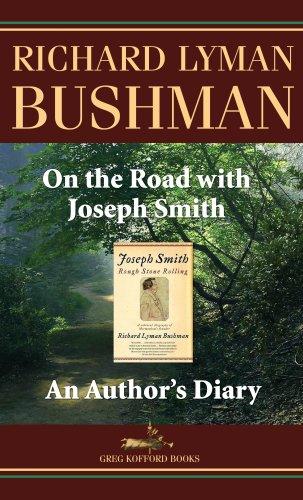
I have been reading Richard Bushman’s published diary On the Road with Joseph Smith. Bushman is the author of Joseph Smith: Rough Stone Rolling, a massive biography of the Mormon prophet. I have read the biography as well and loved it. In this author’s diary he writes of his experiences going to book signings and meeting with people around the country talking about his book and about Joseph Smith.

I found the following entry especially intriguing. He goes on a whole riff about the nature of God and all kinds of interesting stuff.

October 28, 2005

… My son Ben came to the signing after finishing his work in Draper where his small computer firm has an office. Afterward we had dinner at a nearby Chinese restaurant. He was curious about my answer to a question about any inspiration I had while writing the book. The questioner wanted to know if any doctrines had come to me strongly. I replied that some had, but I could not say much about them in that setting. Ben was intrigued by my mysterious evasion, and I told him that some doctrines I considered most valuable to my inner life were incommunicable. When I tried, they fell flat. Later in the discussion, he said he was working with the idea that God had optimized the world to the maximum benefit of all his children. I replied this implied he actually controlled everything, leaving us with no free agency. We went back and forth on this point rather unsatisfactorily. I could not make myself clear, underscoring my feeling about my favorite doctrines going nowhere when I try to describe them. My reservations go beyond my inability to describe them to my uncertainty about their validity. Am I demeaning God in not allowing him perfect control over all events and perfect knowledge of everything that will happen? What is my point of view?

1. God is one of a number of superior intelligences who have learned—how we do not know exactly—to obtain glory and intelligence. They can create worlds and do much else.

2. These gods take us lesser intelligences, swimming about like fish in the sea, under their tutelage, saying they will teach us how to achieve intelligence and glory.

3. One of their great lessons is that we can do more acting together than we can standing (or swimming) alone. Thus, they bind us to them with multiple covenants.

4. We are not only to obey them; we are to join with our brothers and sisters in the order of the priesthood under God’s direction. This priesthood goes back before the foundations of the earth and includes all the gods who have gone before. They are bound into one God whose combined force and intelligence is the source of glory. We may even add to the glory by joining them—like computers strung in parallel, generating computing power. Hence the essential importance of unity.

5. In this sense, the priesthood is God. When joined together like the council of gods that organized the earth, it manifests its godly powers. At the same time, any one God can speak for the whole because they are unified. Adam can become the God of this earth under Christ’s suzerainty.

6. We exist on the ragged edges of this holy order, but in subscribing to it we join the grand alliance that rules the godly universe.

7. Outside of this created order, only chaos reigns, but in the outer darkness are other intelligences such as Lucifer who have orders and priesthoods of their own, independent of and possibly in opposition to Elohim’s.

8. Within the created order, the intelligences find their places, some as animals, some as stones perhaps, some as humans. The diversity of forms on the earth suggests the diversity of unorganized intelligences. Hence the detail in the temple account of creation of the many forms of life, each to fulfill the measure of its creation.

9. Ben believes each of these intelligences will assuredly find its true place where it can maximize its possibility. God will guarantee that. He may be right but I suggest the alternative view that God is constantly recruiting intelligences to the godly path and the success of this operation depends on us. If we attract people to Christ, they get included; if someone doesn’t reach them, these souls may slip to a lesser spot. God will not necessarily guarantee everyone the highest possible position for his or her intelligence. Some may fall to a lower rung because there was no one there to raise them up. It is scary, but it makes life real. What makes it less scary is that there are many ways to grow in intelligence. The Mormons are not the only source of light. Christ radiates throughout the world, through many voices. We need only to listen to one to set our foot on the right path.

As I write, this doctrine tastes good to me. I believe it is truth. All of it can be found in Joseph’s teachings...

I have always found Joseph Smith’s ideas about eternal progression and exaltation very inspiring and expansive. I thought Bushman’s articulation of these concepts was interesting and worth sharing.


Note: The excerpt above is from pages 59-61.

Friday, December 23, 2011

O Holy Night


O Holy Night, by Adolphe Adam, is probably my favorite Christmas song.  The lyrics are absolutely sublime.  The last verse is my favorite because it speaks to me of the essence of Jesus' life - love, peace, and liberation.

This is also my favorite painting of Jesus - Healing at the Pool of Bethesda by Carl Bloch.  I don't know what the artist had in mind with this painting but to me it speaks of Jesus showing compassion toward the outcasts, the people who have been most forgotten and neglected.  I think of this painting whenever I here the third verse of O Holy Night.

This Christmas as I have remembered Jesus Christ I have come back again and again to this song and this image and it has inspired me.  So I wanted to share it.

Merry Christmas